
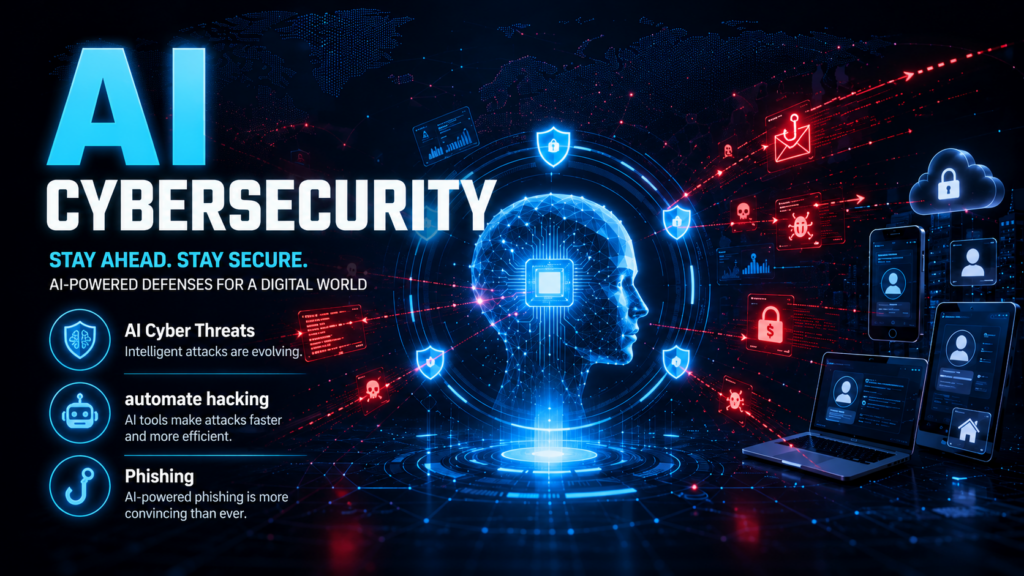
Artificial intelligence is changing cybersecurity faster than most organizations expected. What was once a future concern for large technology companies, governments, and corporate data centers is now becoming a direct risk for businesses, employees, and everyday internet users.
On June 22, 2026, cybersecurity agencies from the Five Eyes alliance — the United States, United Kingdom, Canada, Australia, and New Zealand — issued a rare joint warning about the growing impact of frontier AI models on cyber risk. Their message was clear: AI-powered cyber threats are evolving on a timeline measured in months, not years.
This warning should not be treated as another technical advisory for IT departments only. It is a business warning, a consumer warning, and a digital trust warning.
AI is not only helping defenders find vulnerabilities faster. It is also giving attackers new ways to automate hacking, scale phishing campaigns, discover weaknesses, and exploit systems before human teams can respond.
The New Reality of AI Cyber Threats
Cybercrime has always depended on speed, scale, and opportunity. AI improves all three.
In the past, launching a serious cyberattack required technical knowledge, coding skills, infrastructure, research, and time. Today, AI-assisted tools can help attackers write malicious code, analyze systems, generate convincing phishing messages, automate reconnaissance, and identify weak points across internet-connected infrastructure.
This lowers the barrier to entry for cybercrime.
Attackers no longer need to be elite engineers to create convincing scams or test vulnerable systems. AI can assist with tasks that previously required years of experience. This means more attackers, faster attacks, and a much larger volume of threats.
For companies, this creates a serious challenge. Traditional cybersecurity assumes that there is time to detect, patch, investigate, and respond. But AI-driven attacks compress that timeline dramatically.
A vulnerability that once took days or weeks to exploit may now be discovered and tested in minutes.
Why This Matters for Businesses
Every business today depends on digital systems. Websites, CRMs, email platforms, cloud storage, payment systems, ERP software, customer databases, remote work tools, and marketing automation platforms are all part of daily operations.
When attackers use AI to scan and exploit these systems, the risk increases across the entire organization.
The most exposed areas include:
- outdated websites and plugins
- weak passwords
- missing multi-factor authentication
- unpatched servers
- poorly configured cloud services
- exposed databases
- unsecured APIs
- employee email accounts
- legacy software systems
- third-party integrations
Small and medium-sized businesses are especially vulnerable because they often rely on limited IT resources. Many assume they are too small to be targeted. In reality, automated attacks do not care about company size. They scan everything.
If a system is online and vulnerable, it can become a target.
AI Is Making Phishing More Dangerous
One of the most immediate risks is AI-generated phishing.
Traditional phishing emails were often easy to recognize. They contained spelling mistakes, generic greetings, strange formatting, or suspicious language. AI changes that.
Modern AI tools can generate professional, personalized, and context-aware messages at scale. Attackers can scan public information from LinkedIn, websites, social media profiles, company pages, and press releases to create highly convincing emails.
Instead of receiving a generic spam message, an employee may receive an email that appears to reference a real project, a known supplier, a colleague, an invoice, or a recent business event.
This makes phishing harder to detect and easier to trust.
AI can also generate phishing messages in multiple languages, adapt tone and style, and create variations that bypass traditional spam filters. For international companies, this creates additional exposure across markets and teams.
How AI Cyberattacks Affect Everyday Users
AI cyber threats are not only a corporate problem. When businesses are breached, ordinary users often pay the price.
The real target behind many attacks is consumer data.
This may include:
- names and surnames
- email addresses
- phone numbers
- saved passwords
- payment information
- cloud files
- identity documents
- private messages
- account recovery details
- login credentials
Once this data is stolen, it can be reused in future attacks. Criminals can attempt account takeovers, identity theft, financial fraud, blackmail, or more personalized scams.
This is why every user should treat cybersecurity as a personal responsibility, not only a company responsibility.
If one of your old accounts is breached, attackers may use that data to access your current accounts, especially if you reuse passwords.
The Problem With Human-Speed Cybersecurity
Cybersecurity teams are facing a difficult imbalance.
Attackers are increasingly using automation, while many defenders still depend on manual review, manual patching, and human-led investigation. This creates a speed gap.
AI-powered offensive tools can scan thousands of systems quickly. Human teams cannot manually check every server, plugin, user account, log file, and vulnerability at the same speed.
This is why cybersecurity must also become more automated.
Businesses need systems that can detect unusual behavior, prioritize risks, block suspicious activity, isolate compromised accounts, and alert teams before damage spreads.
The future of cybersecurity will not be humans versus machines. It will be humans supported by defensive AI against attackers supported by offensive AI.
Fighting AI Cyber Threats With AI Defenses
The same technology that increases cyber risk can also strengthen cyber defense.
Defensive AI can help organizations:
- monitor network behavior
- detect unusual login patterns
- identify suspicious emails
- analyze system logs
- discover vulnerabilities
- prioritize security patches
- detect compromised accounts
- isolate infected systems
- support incident response
- improve employee security awareness
However, AI defense is not a magic solution. It must be combined with strong cybersecurity basics, clear governance, proper access controls, secure infrastructure, and regular audits.
AI can help detect risk faster, but companies still need the right processes to act on those signals.
What Businesses Should Do Now
Companies should not wait for a major incident before improving cybersecurity. The AI-driven threat landscape is moving too fast.
A practical cybersecurity action plan should include:
1. Enable Multi-Factor Authentication
Multi-factor authentication should be mandatory for email, admin panels, cloud platforms, CRM systems, hosting accounts, and financial tools.
Passwords alone are no longer enough.
2. Update and Patch Systems Regularly
Outdated software is one of the easiest targets for automated attacks. Websites, plugins, servers, operating systems, databases, and business applications must be updated regularly.
3. Review User Access
Employees and external partners should only have access to the systems they actually need. Old accounts should be removed immediately.
The fewer unnecessary permissions exist, the smaller the attack surface becomes.
4. Secure Websites and Hosting
Business websites should be protected with SSL, firewalls, backups, malware scanning, secure admin access, updated CMS platforms, and regular performance and security checks.
For many companies, the website is the most visible digital asset and one of the most common entry points.
5. Train Employees Against AI Phishing
Employees should understand that phishing messages are no longer obvious. A suspicious email may now look professional, personal, and highly relevant.
Training should focus on verification habits, not only on spotting spelling mistakes.
6. Use Strong Backup and Recovery Processes
Backups should be automatic, encrypted, tested, and stored separately from the main system. A backup that cannot be restored is not a real backup.
7. Monitor Logs and Suspicious Activity
Companies should monitor unusual login attempts, file changes, failed authentication attempts, unexpected admin actions, and abnormal data transfers.
Early detection can prevent a minor incident from becoming a major breach.
What Everyday Users Should Do
Individual users also need stronger digital habits.
The most important steps are simple but powerful:
- use unique passwords for every account
- enable multi-factor authentication
- delete old unused accounts
- avoid clicking suspicious links
- check sender email addresses carefully
- update devices and applications
- avoid saving passwords in unsecured places
- use a password manager
- never share verification codes
- be careful with public Wi-Fi
- review cloud storage permissions
- keep personal information limited on public profiles
In an AI-driven phishing environment, skepticism becomes a security tool.
Why Cybersecurity Is Now a Business Strategy Issue
Cybersecurity is no longer only a technical department responsibility. It directly affects revenue, trust, operations, compliance, customer relationships, and brand reputation.
A serious cyber incident can stop sales, expose customer data, damage search visibility, interrupt services, create legal obligations, and reduce market confidence.
For this reason, business leaders must treat cybersecurity as part of digital strategy.
AI adoption should go hand in hand with AI risk management. Companies that use AI tools, automation, chatbots, APIs, cloud platforms, and integrated business systems must also invest in secure architecture.
Digital transformation without cybersecurity is not transformation. It is exposure.
The Future: Faster Attacks, Smarter Defenses
The Five Eyes warning marks an important moment. The world’s leading cyber agencies are telling businesses that the risk is accelerating now.
AI will continue to improve. Cybercriminals will continue to adapt. Phishing will become more personalized. Vulnerability scanning will become more automated. Attacks will become faster and harder to detect.
But businesses are not powerless.
With the right combination of cybersecurity basics, AI-assisted defense, employee awareness, secure infrastructure, and proactive monitoring, organizations can reduce exposure and improve resilience.
The key is to act before the attack, not after it.
Conclusion
AI cyber threats are no longer a distant future problem. They are already reshaping the way attackers operate and the way businesses must defend themselves.
For companies, this means cybersecurity must become faster, smarter, and more proactive. For everyday users, it means that basic internet safety is no longer optional.
Multi-factor authentication, strong passwords, regular updates, secure websites, backups, access control, and phishing awareness are now essential parts of digital life.
AI will define the next phase of cybersecurity. The organizations that prepare now will be stronger, more trusted, and more resilient in the years ahead.